CONROE, Texas — When Texas Attorney General Ken Paxton announced on October 31, 2026, that his office’s Election Integrity Unit had arrested multiple individuals accused of voting while on felony parole during the 2026 early voting period, the announcement drew immediate political attention across the Houston metro area.
Yet as the initial wave of headlines gives way to formal criminal procedure, the cases face a complex statutory and constitutional gauntlet. While agents with the Office of the Attorney General (OAG) possess law enforcement authority to investigate election complaints and execute arrest warrants, bringing felony charges to trial in Texas requires clearing two substantial legal hurdles: proving a strict subjective "knowledge" element under Texas Election Code § 64.012 and navigating the separation-of-powers boundaries established by the Texas Court of Criminal Appeals in State v. Stephens.
Texas Election Integrity Prosecution Matrix (November 2026)
TEXAS ELECTION INTEGRITY PROSECUTION MATRIX
├── Investigation Trigger: October 27 citizen tip regarding Harris County early voting
├── Arrest & Warrant Window: Warrants issued October 30 in Montgomery County; announced October 31
├── Identified Arrests in Jail Records: Angel Alberto Evora (46) & Darrick Brookshire Haynie (59)
├── Governing Felony Statute: Texas Election Code § 64.012 (2nd-degree felony; 2–20 years imprisonment)
├── Core Mens Rea Burden: State must prove the voter knew they were ineligible when casting a ballot
└── Constitutional Constraint: State v. Stephens (OAG barred from unilateral trial prosecution without DA consent)
1. The Record So Far: Warrant Filings vs. Unsealed Charging Instruments
In its initial October 31 press release, the Attorney General’s office withheld the names, exact count, and specific charging instruments of those detained, referring broadly to "multiple individuals" arrested on warrants issued in Montgomery County.
Subsequent Montgomery County jail booking logs and local reporting by KPRC Click2Houston and FOX 26 Houston identified two Harris County residents booked into the Montgomery County Jail on Saturday morning, October 31, on felony illegal-voting warrants: Angel Alberto Evora, 46, and Darrick Brookshire Haynie, 59. Department of Public Safety and supervision records cited in local coverage indicate that Evora’s parole is scheduled to expire in 2028, while Haynie’s parole runs through February 2027.
Crucially, however, an arrest warrant reflects only an initial magistrate finding of probable cause. Formal felony prosecutions in Texas district courts require a grand jury indictment, and full probable-cause affidavits detailing where each ballot was cast, whether provisional ballots were utilized, and what written advisories each defendant received upon release from Texas Department of Criminal Justice (TDCJ) custody remain central to the unsealed record.
2. The Legal Hurdles: Mens Rea Under § 64.012 and State v. Stephens
Moving from arrest warrants to sustainable felony convictions implicates two distinct bodies of Texas law:
The Texas Election Prosecution Pipeline:
[OAG & TDCJ Cross-Check] ➔ [Magistrate Arrest Warrant] ➔ [Local DA Referral / Deputization (Stephens)] ➔ [Grand Jury Indictment & § 64.012 Proof]
The Subjective "Knowledge" Element (Texas Election Code § 64.012)
Under Texas Election Code § 11.002(a)(4), a person with a final felony conviction regains voting eligibility automatically once they have "fully discharged the person's sentence, including any term of incarceration, parole, or supervision". Casting a ballot while still on active parole violates that eligibility rule.
However, criminal liability under Texas Election Code § 64.012(a)(1)—classified as a second-degree felony punishable by 2 to 20 years in prison—does not attach automatically upon proof of ineligibility. The statute specifies that a person commits an offense only if they "knowingly or intentionally ... vote or attempt to vote in an election in which the person knows the person is not eligible to vote".
Texas appellate courts have repeatedly emphasized that the State bears the burden of proving subjective knowledge of ineligibility—not merely that the voter was on supervision or made a good-faith mistake regarding when their civil rights were restored. Furthermore, under § 64.012(c), if an individual cast a provisional ballot, a conviction cannot rest solely on signing a provisional ballot affidavit without independent corroborating evidence of intent.
Jurisdictional Limits Under State v. Stephens
Even where probable cause is established, Attorney General Paxton’s office cannot unilaterally prosecute the cases in district court.
In its landmark December 2021 ruling in State v. Stephens, the Texas Court of Criminal Appeals struck down Texas Election Code § 273.021 as unconstitutional under the Texas Constitution’s Separation of Powers Clause. The high court held that representing the State in criminal trial courts is a function constitutionally assigned to local district and county attorneys—not the Attorney General, an executive branch officer.
Under Stephens, while the OAG may investigate election complaints and execute warrants, the Attorney General cannot present indictments to a grand jury or try criminal election cases unless explicitly invited, consented to, and deputized by the local district attorney with venue over the offense.
3. What’s Next: Indictment Timelines and Venue Scrutiny
As the Montgomery County cases enter pre-indictment review, legal observers are watching three immediate procedural fronts:
- Grand Jury Presentation & Local DA Authority: Because the warrants were issued in Montgomery County while both identified defendants reside in Harris County, defense counsel are expected to scrutinize both venue and prosecutorial standing—specifically whether the Montgomery County District Attorney’s Office is independently handling grand jury presentment or formally deputizing OAG prosecutors in compliance with State v. Stephens.
- Parole Discharge & Registration Records: Defense attorneys routinely subpoena TDCJ parole release packets and county voter registration applications to determine whether applicants received conflicting notices or were placed on active voter rolls without clear written advisories regarding parole disqualification.
- Civil Rights & Chill Litigation: Voting rights advocates have closely monitored pre-Election Day arrests involving parole eligibility confusion, warning that high-profile prosecutions without clear proof of criminal intent risk chilling lawful participation among Texans who have completed supervision or received deferred adjudication (which does not strip voting eligibility under § 11.002(b)).
Video Coverage & Broadcast Reporting
Review the broadcast coverage and legal analysis regarding the early voting arrests and statutory standards below:
Verifiable Sources & Further Reading
- Official OAG Announcement: Office of the Attorney General: Attorney General Ken Paxton Announces Arrests of Convicted Felons for Illegally Voting in Texas
- Local Arrest & Booking Reporting: KPRC Click2Houston: Harris County Men Charged with Illegal Voting While on Felony Parole
- Texas Court of Criminal Appeals Precedent: Justia Law: State v. Stephens (PD-1032-20)
- Statutory Analysis of § 64.012: Texas Legal Research & Analysis: Texas Illegal-Voting Arrests and Felony Voting Rights
Frequently Asked Questions
Objective Wire Library · Connected Entries
Continue Exploring Related Topics
Ken Paxton Illegal Voting Arrests Texas | Felons Charged
Texas Attorney General Ken Paxton announced the arrests of convicted felons who allegedly voted illegally in the 2026 election while on parole.

Unique Green-Battle | $2.2M Funeral Home Fraud Charges
Unlicensed Houston funeral director Unique Green-Battle stormed out of a Harris County courthouse after being charged with $2.2 million in estate fraud, including forging a will and posing as a deceased client widow.
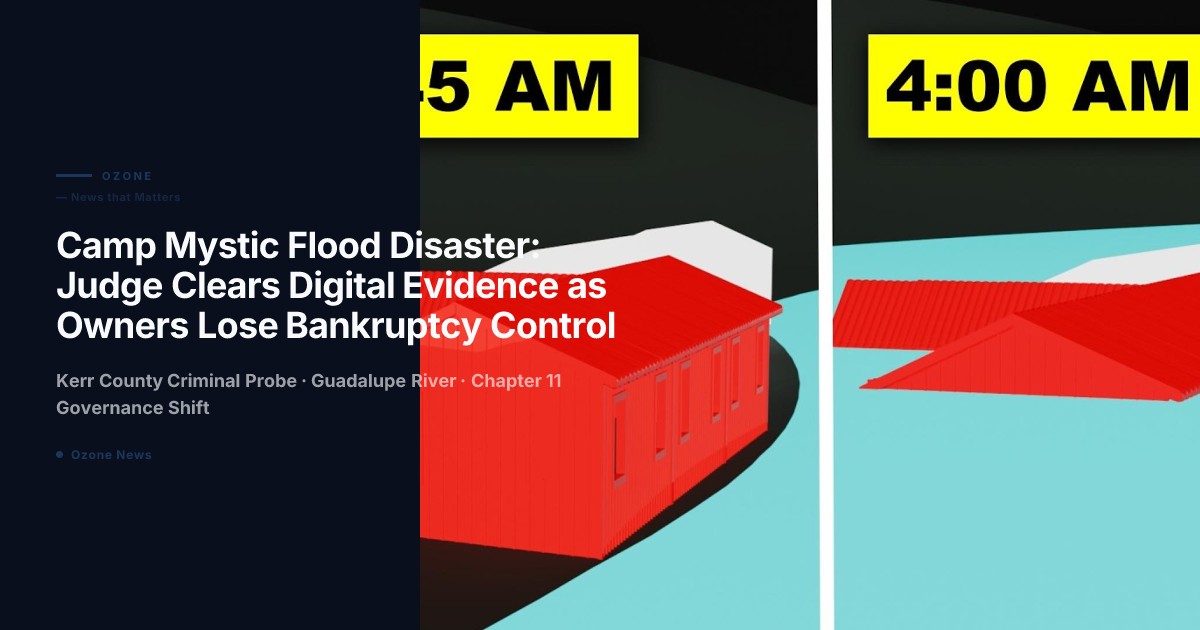
Camp Mystic Flood Disaster: Judge Clears Digital Evidence as Owners Lose Bankruptcy Control
Major November rulings shift both the Kerr County criminal inquiry and Chapter 11 bankruptcy of Camp Mystic following the catastrophic Guadalupe River flash floods that claimed 28 lives.

DOJ Summer Surge Pandemic Loan Fraud | $15.3M Stolen in Texas
Federal investigators concluded a massive "summer surge" of COVID-era loan fraud indictments, uncovering over $15.3 million stolen in Texas alone as part of a $245 million nationwide crackdown.
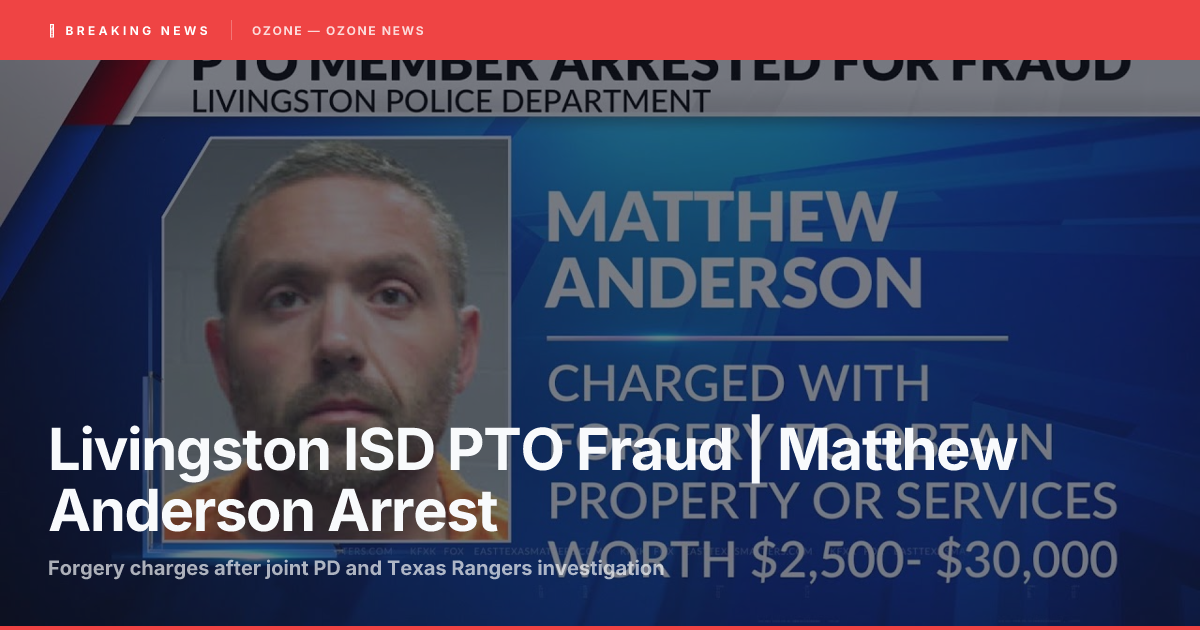
Livingston ISD PTO Fraud | Matthew Anderson Arrest
A 40-year-old Livingston man, Matthew Anderson, has been arrested for allegedly falsifying bank statements from a Livingston ISD Parent Teacher Organization for personal financial gain.
Georgetown The District Fraud | $400M Jury Verdict 2026
A Williamson County jury has ordered the developers behind the failed 400-acre Georgetown project, "The District," to pay over $400 million in damages for fraud and breach of contract. The verdict includes $300 million in punitive damages.