
GEORGETOWN, Texas — Securing a nine-figure civil judgment in a Texas courtroom is one legal hurdle; turning that paper award into collectible recovery is an entirely separate battle.
Following the July 2026 Williamson County jury verdict ordering Frisco-based entrepreneurs Gopala Krishnan and Sakthivel Gounder to pay more than $400 million—including $300 million in punitive damages—to Georgetown contractor Energy Commissioning Inc. over the collapsed 400-acre waterfront project known as "The District," litigation has shifted squarely into post-judgment enforcement and procedural maneuvering.
At trial, jurors found that the developers defrauded Energy Commissioning Inc. under a $21 million development agreement while pitching the ambitious mixed-use project to European financiers in pursuit of $5 billion in bond funding. Now, enforcing that award requires navigating Texas statutory caps on exemplary damages, competing federal receivership claims over the underlying Williamson County acreage, and an ongoing federal regulatory enforcement docket.
Post-Verdict Legal & Asset Profile
POST-VERDICT LEGAL & ASSET PROFILE
├── Underlying Trial Verdict: $400M+ total award ($100M+ actual damages; $300M punitive damages)
├── Judgment Creditor: Energy Commissioning Inc. (Georgetown-based infrastructure contractor)
├── Judgment Debtors: Gopala Krishnan & Sakthivel Palani Gounder (Frisco entrepreneurs)
├── Contested Land Footprint: ~404.5-acre tract near E. State Highway 29 / I-35 corridor in Georgetown
├── Overlapping Federal Case: SEC v. Krishnan et al. (E.D. Tex. Case No. 4:23-cv-00885; Receiver Anthony Box)
└── Criminal Prosecution Status: No state or federal criminal charges filed to date regarding "The District"
1. Post-Judgment Motions: Texas Punitive Caps and Appellate Hurdles
In Texas civil practice, a $300 million punitive award immediately triggers intensive post-verdict motion practice before and after final judgment entry:
The Texas Judgment Enforcement Pipeline:
[Jury Verdict ($400M+)] ➔ [JNOV & Statutory Cap Motions] ➔ [Abstract of Judgment & Turnover Orders] ➔ [Appellate Bond / Asset Execution]
- Statutory Exemplary Damage Caps (Tex. Civ. Prac. & Rem. Code § 41.008): Under Texas law, punitive (exemplary) damages are generally capped at the greater of two times economic damages plus an equal amount of non-economic damages (up to $750,000), or $200,000—unless the plaintiff proves conduct meeting specific felony "cap-busting" exceptions such as securing execution of a document by deception or misapplication of fiduciary property. Defense post-trial motions—including motions for judgment notwithstanding the verdict (JNOV) and motions for new trial—focus on challenging both the fraud findings and whether any statutory cap-buster applies.
- Judgment Liens and Supersedeas Bonds: Under Texas Property Code §§ 52.002–52.003, recording an Abstract of Judgment with the Williamson County Clerk attaches a 10-year judgment lien to any non-exempt real property held by the debtors in the county. To halt active collection—such as writs of execution, bank garnishments, or court-ordered turnover proceedings—while pursuing an appeal to the Third Court of Appeals, judgment debtors must post a supersedeas bond (capped in Texas at the lesser of 50% of net worth or $25 million).
2. Collection & Receivership Battles Over the Undeveloped Georgetown Acreage
For judgment creditors, the central practical obstacle in Williamson County is not merely locating land—it is priority of claims. While the site of "The District" remains largely undeveloped farmland along the San Gabriel River and I-35 growth corridor, the underlying real estate has already been entangled in federal receivership and lender foreclosure proceedings.
In a separate federal enforcement action in the Eastern District of Texas (SEC v. Krishnan et al., Case No. 4:23-cv-00885), court-appointed federal receiver Anthony Box was appointed in March 2024 to marshal and liquidate assets linked to Krishnan, Gounder, and their investment firm, Nanban Ventures LLC. Quarterly receivership reports filed in that federal docket reflect that the roughly 404.5-acre Georgetown Property (located along E. State Highway 29 in Williamson County) was already subject to senior mortgage liens and bank sale proceeds—with the federal receivership holding claims to net sale distributions alongside dozens of other frozen real estate and startup assets.
Because federal receivership orders and senior mortgagees take precedence over later-filed state court judgment liens, Energy Commissioning Inc.’s post-judgment recovery efforts must navigate both senior secured lenders and the federal receivership estate's claims process.
3. Regulatory Enforcement & Criminal Exposure: Where Probes Stand
While the Williamson County verdict adds massive civil liability, regulatory and criminal exposure remains divided across separate legal tracks:
- Federal SEC Litigation Already Active: Unlike many civil fraud cases that wait years for regulatory attention, Krishnan and Gounder have already faced major federal civil enforcement by the U.S. Securities and Exchange Commission (SEC) in the Eastern District of Texas (including Fifth Circuit appellate proceedings in Case No. 24-40291) over investor fundraising across Nanban Ventures entities, resulting in asset freezes, final judgments, and ongoing liquidations.
- Criminal Inquiry Status: Despite the severity of the Williamson County jury’s fraud findings and the rare $300 million punitive award, no state or federal criminal charges have been filed against Krishnan or Gounder in connection with "The District" or Nanban Ventures. In Texas, civil fraud verdicts are routinely reviewed by state and federal prosecutors when allegations involve multi-million-dollar financial misrepresentations, meaning courtroom exhibits and sworn trial transcripts from Georgetown remain part of the public record available to investigators.
Video Coverage & Regulatory Case Background
Examine investigative analysis and financial report breakdowns regarding the Nanban Ventures SEC receivership and the financial entanglements surrounding Krishnan and Gounder:
Verifiable Sources & Further Reading
- Williamson County Verdict Coverage: Objective Wire: Georgetown The District Fraud — $400M Jury Verdict 2026
- Federal Receivership & Georgetown Property Docket: Eastern District of Texas Receivership Report (Case 4:23-cv-00885-SDJ, Dkt. 342)
- Fifth Circuit SEC Appeal Docket: Justia Dockets: SEC v. Krishnan (Case No. 24-40291)
- Texas Post-Judgment Enforcement Framework: The Cromeens Law Firm: Post-Judgment Collections in Texas
Frequently Asked Questions
Objective Wire Library · Connected Entries
Continue Exploring Related Topics
Georgetown The District Fraud | $400M Jury Verdict 2026
A Williamson County jury has ordered the developers behind the failed 400-acre Georgetown project, "The District," to pay over $400 million in damages for fraud and breach of contract. The verdict includes $300 million in punitive damages.
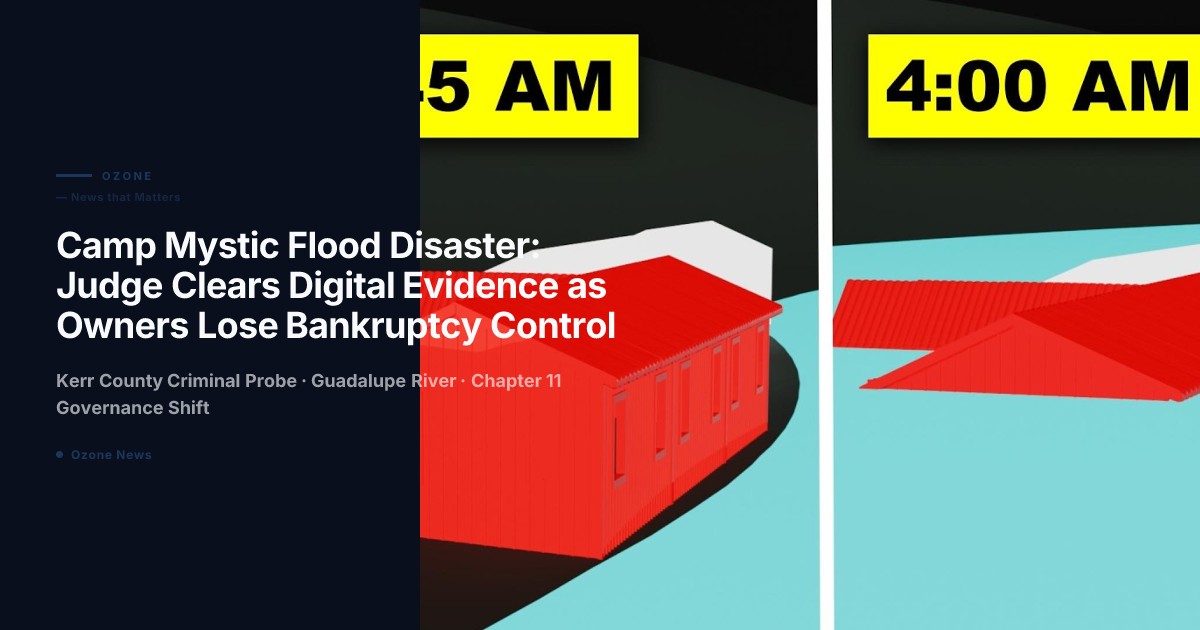
Camp Mystic Flood Disaster: Judge Clears Digital Evidence as Owners Lose Bankruptcy Control
Major November rulings shift both the Kerr County criminal inquiry and Chapter 11 bankruptcy of Camp Mystic following the catastrophic Guadalupe River flash floods that claimed 28 lives.

Ken Paxton Illegal Voting Arrests Texas | Felons Charged
Texas Attorney General Ken Paxton announced the arrests of convicted felons who allegedly voted illegally in the 2026 election while on parole.

DOJ Summer Surge Pandemic Loan Fraud | $15.3M Stolen in Texas
Federal investigators concluded a massive "summer surge" of COVID-era loan fraud indictments, uncovering over $15.3 million stolen in Texas alone as part of a $245 million nationwide crackdown.
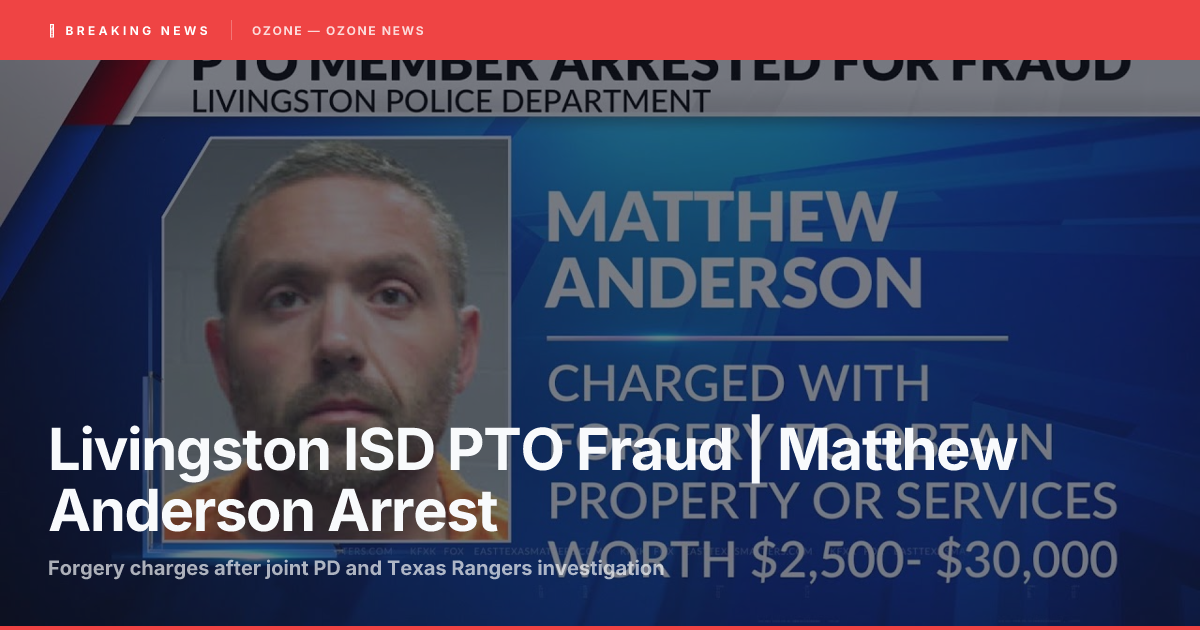
Livingston ISD PTO Fraud | Matthew Anderson Arrest
A 40-year-old Livingston man, Matthew Anderson, has been arrested for allegedly falsifying bank statements from a Livingston ISD Parent Teacher Organization for personal financial gain.

Magnolia Diagnostics $24M COVID Testing Fraud Settlement
Magnolia Diagnostics, its owners John and Kelly Bains, and its investors have agreed to pay $24 million to resolve allegations of billing Medicare for unnecessary respiratory panels alongside COVID-19 tests on vulnerable seniors.